3D printing has blown up in the last few years, and honestly, it’s easy to see why. These machines are addictive once you start using them.
Here’s the catch, though. They’re easy enough to pick up, but genuinely tough to master. The right accessories for your 3D printer make a difference, sure, but knowledge is what separates okay prints from really great ones.
I’ve rounded up 10 books that cover everything from absolute beginner basics to CAD design to actually making money with your printer. Each one has strong reviews and works for a different skill level.
Quick Comparison Chart
| # | Book | Our Rating | ||
|---|---|---|---|---|
| 1 |  |
Beginner's Guide to 3D Printing | ★★★★★ | Check Price |
| 2 | |
Getting Started with 3D Printing | ★★★★★ | Check Price |
| 3 |  |
How to Make Money with 3D Printing | ★★★★☆ | Check Price |
| 4 | 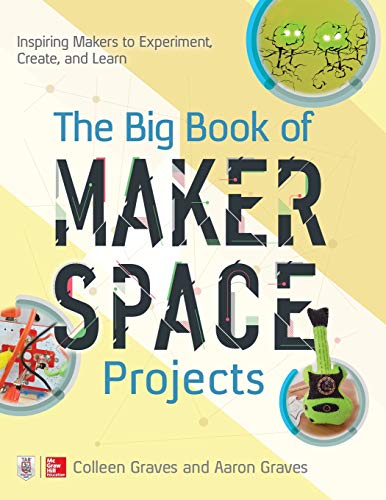 |
The Big Book of Makerspace Projects | ★★★★☆ | Check Price |
| 5 |  |
3D Pen Jewelry | ★★★★☆ | Check Price |
| 6 |  |
Maintaining and Troubleshooting Your 3D Printer | ★★★★☆ | Check Price |
| 7 |  |
3D Printing for Dummies | ★★★★☆ | Check Price |
| 8 |  |
Design for 3D Printing | ★★★★☆ | Check Price |
| 9 |  |
3D CAD with Autodesk 123D | ★★★★☆ | Check Price |
| 10 |  |
3D Printed Science Projects | ★★★★☆ | Check Price |
1. Beginner’s Guide to 3D Printing — Best Overall
Beginner's Guide to 3D Printing
Written by Mike Rigsby, this 300+ page book provides step-by-step guides for example models. Starting with simple designs like dominoes and cubes, you progress to jewel boxes and working paddleboats.
Pros
- Step-by-step guides take you from simple to advanced projects
- Over 300 pages of detailed instructions and tips
- Available in both digital and paperback formats
- Highly rated with positive reviews across multiple platforms
Cons
- Focuses primarily on FDM printing methods
- Some projects require specific printer models
Available in both digital and paperback, this is one of the strongest introductions to 3D printing I’ve come across. Whether you just unboxed your first machine or you’re still shopping, it’s a perfect starting point.
The whole approach is learn by doing. Rigsby walks you through actual projects step by step, starting with basic shapes like dominoes and cubes, then gradually working up to jewel boxes and even a functioning paddleboat.
Mike Rigsby wrote all 300+ pages, and it dropped toward the end of 2021. Reviews have been consistently positive across Amazon and other platforms.
If you’re new to 3D printing, you really can’t do better than this book.
2. Getting Started with 3D Printing — Runner Up
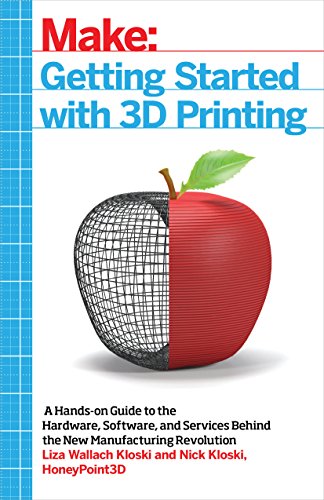
Getting Started with 3D Printing
Written by Nick Kloski and Liza Wallach Kloski, this book delves into the story of 3D printers and teaches you how to take advantage of the technology along with the best hardware and software.
Pros
- Written in simple, easy to understand language for all skill levels
- Covers both the history and practical aspects of 3D printing
- Includes comprehensive hardware and software recommendations
- Highly recommended by the 3D printing community
Cons
- More theory-focused than project-based
- Some hardware recommendations may become dated
Also aimed at beginners, but from a totally different angle. Instead of diving straight into projects, it explores the history of 3D printing and how the technology actually works beneath the surface.
By the time you finish, you’ll have a solid grasp of the best hardware and software out there. The writing is plain and approachable, making it a natural companion to the more hands-on guide above.
Nick Kloski and Liza Wallach Kloski wrote this together, and their enthusiasm for where 3D printing is headed really comes through. Published in May 2021, it’s been widely recommended by the 3D printing community ever since.
3. How to Make Money with 3D Printing — Best for Business
How to Make Money with 3D Printing
Jeffrey Ito explains how to turn your 3D printing hobby into a real business. The book covers monetization strategies, outsourcing design work, and scaling your 3D printing operation.
Pros
- Teaches practical business strategies for 3D printing entrepreneurs
- Covers outsourcing design work to scale your operation
- Written by a USC graduate who created a 3D Mastermind Group
- Available digitally for immediate access
Cons
- Focuses on business rather than technical printing skills
- Some marketplace recommendations may have changed
Before anyone asks: no, “make money” doesn’t mean “print counterfeit bills.” This book is about the real business potential behind 3D printing once you get past the novelty phase.
If you’ve been at this for a while and want to turn your hobby into income, Ito lays out exactly how. He covers selling printed products, outsourcing design work, and scaling the business side so you’re not doing everything yourself.
Jeffrey Ito is a USC grad who created a 3D “Mastermind Group” focused on the printing industry. The book clocks in at about 140 pages and has earned plenty of positive reviews since its digital launch.
4. The Big Book of Makerspace Projects — Best for Ideas
The Big Book of Makerspace Projects
Written by Aaron Graves and Colleen Graves, this book provides creative project ideas ranging from greeting cards and paper circuits to scribble machines, instruments, and holograms.
Pros
- Reached number one in its relevant niches on Amazon
- Projects range from simple cards to advanced holograms and instruments
- Improves skills while providing endless hours of entertainment
- Available in both Kindle and paperback formats
Cons
- Not all projects require a 3D printer specifically
- More focused on project ideas than printing technique
Ever hit that wall where you’re staring at your printer and can’t think of a single thing to make? You’re not alone.
It happens to basically everyone at some point.
This book is the cure. It’s loaded with ideas that range from simple greeting cards and paper circuits to scribble machines, musical instruments, and even holograms.
The creativity in here is seriously impressive.
Aaron Graves and Colleen Graves out of Denton, Texas put this together, and it climbed to number one in its niche on Amazon. That success earned it both Kindle and paperback editions.
5. 3D Pen Jewelry — Best for Crafts
3D Pen Jewelry
Author Rayan Turner provides unique jewelry designs and accessories you will not find anywhere else. This pamphlet-style book helps you create items you can keep, gift, or sell.
Pros
- Unique jewelry designs not found in any other book
- Builds confidence to create your own original designs
- Perfect for gifts, personal use, or selling through a business
- Widely praised for its creative and original project ideas
Cons
- Under 50 pages so it is a quick read
- Requires a 3D pen rather than a full 3D printer
3D printing isn’t all about big machines and professional setups. You can have a blast with nothing more than a 3D pen, and this book proves it.
Rayan Turner assembled jewelry designs and accessories that you genuinely won’t find anywhere else. Wear them, give them as gifts, or sell them for a profit.
It’s a surprisingly effective way to build skills and confidence at the same time.
Released in November 2021, this pamphlet-style book clearly hits the mark. It’s short, but by the time you work through Turner’s designs, you’ll be itching to create your own pieces from scratch.
6. Maintaining and Troubleshooting Your 3D Printer — Best for Maintenance
Maintaining and Troubleshooting Your 3D Printer
Written by Charles Bell, this 500+ page reference covers the most common 3D printer problems and their solutions. It includes model-specific maintenance advice for popular brands.
Pros
- Over 500 pages of detailed maintenance and repair instructions
- Includes model-specific advice for popular 3D printer brands
- Written from an extremely experienced point of view
- Serves as a long-term reference bible for printer upkeep
Cons
- Higher price point than most books on this list
- Some printer models covered may be discontinued
Let’s be real. 3D printers are mechanical machines, and they will break down. Not if. When.
This book covers the most common failures and walks you through fixing each one.
You also get preventive maintenance tips so you can keep things running smoothly before problems start. Specific printer models come up throughout, so the advice is tailored to actual machines rather than generic “check your settings” troubleshooting.
It’s pricier than most books on this list, but the reviews justify it. Think of it as your dedicated repair manual. It’ll sit on the shelf and come off whenever something goes wrong.
Charles Bell wrote this beast at over 500 pages, first published in the summer of 2021.
7. 3D Printing for Dummies — Best for Absolute Beginners
3D Printing for Dummies
Written by Richard Horne and Kalani Kirk Hausman, this nearly 400-page guide covers how the printing process works, maintenance, software usage, and environmentally conscious practices.
Pros
- Part of the trusted Dummies series with a proven teaching format
- Nearly 400 pages covering every aspect of 3D printing
- Available in both digital and paperback formats
- Covers software, maintenance, and eco-friendly printing practices
Cons
- One of the older books on this list
- Some software references may be outdated
The Dummies series rarely lets you down, and this one holds up to that standard. It covers how 3D printing works, basic maintenance, software walkthroughs, and even gets into eco-friendly printing practices.
Richard Horne and Kalani Kirk Hausman wrote it. At close to 400 pages, there’s a lot in here. It’s the kind of reference you keep nearby and flip open whenever something isn’t clicking.
Reviews are solid across the board. It’s one of the older titles on this list, sure, but the fundamentals haven’t changed.
8. Design for 3D Printing — Best for Design
Design for 3D Printing
Written by three expert authors, this 160-page book covers remixing, scanning, creating, editing, and utilizing the best source files for all types of 3D printing projects.
Pros
- Written by three authors combining deep expertise in design
- Covers scanning, remixing, creating, and editing 3D files
- Perfect for both beginners and experts looking to improve designs
- Well-received reviews confirm its practical value
Cons
- Shorter than some competing design books
- Does not cover specific 3D printer operation in depth
Whether you’re just getting started or already comfortable running your printer, this book is all about the design side. Remixing existing files, scanning real objects, creating designs from scratch, editing what’s already out there. It covers the whole workflow.
Three authors combined their expertise: Samuel Bernier, Tatiana Reinhard, and Bertier Luyt. You’ll learn about different printing technologies, the software landscape, and where to find the best source files for your projects.
At 160 pages, it’s a focused, efficient read. Published in October 2021, it’s earned positive reviews from people who actually applied what they learned.
9. 3D CAD with Autodesk 123D — Best for CAD
3D CAD with Autodesk 123D
Written by Emily Gertz and Jesse Harrington Au, this 120-page book teaches you computer-aided design and fabrication using Autodesk 123D software and its many tools.
Pros
- Focused introduction to CAD software for 3D printing newcomers
- Teaches you to scan and print any design you can imagine
- Includes creative project ideas like prototyping and building
- One of the newer books with an approachable writing style
Cons
- Autodesk 123D has been discontinued in favor of newer tools
- Only about 120 pages so coverage is relatively brief
Ready to stop downloading other people’s files and start creating your own from scratch? This is a great place to begin. It’s all about CAD and digital fabrication through the Autodesk 123D suite.
Projects range from prototyping playground equipment to sculpting statues to building birdhouses. Basically anything you can imagine. Once you get comfortable with the tools, the ideas start flowing fast.
Emily Gertz and Jesse Harrington Au wrote this ~120-page guide. It’s concise, welcoming, and well regarded by readers who used it as their first taste of CAD.
One note: Autodesk 123D has been discontinued since publication. But the fundamental CAD skills translate directly to current tools like Tinkercad and Fusion 360.
10. 3D Printed Science Projects — Best for Education
3D Printed Science Projects
Written by Rich Cameron and Joan Horvath, this 200-page book provides science fair ideas and classroom projects for teachers and parents who want 3D printing as a learning tool.
Pros
- Readers consistently praise it as one of the best introductions to the topic
- Designed specifically for science fairs and classroom use
- Makes 3D printing accessible and fun for children
- Covers scientific applications that prepare kids for future technology
Cons
- Targeted at educators rather than general hobbyists
- Narrower audience compared to general 3D printing books
Got kids in the house? This is the book. Children see a 3D printer and immediately want to play with it.
This book takes that excitement and channels it into real learning.
Rich Cameron and Joan Horvath designed projects for home use, science fairs, and classroom settings. With 3D printing becoming a bigger piece of STEM education every year, getting kids started early with hands-on science projects is a real advantage.
It runs 200 pages and came out in May 2021. Written for both teachers and parents who want to make 3D printing genuinely educational.
The impressive part? Readers consistently call it one of the best educational 3D printing books out there.
How We Evaluated
Here’s what we looked at when putting this list together.
Content Depth - Does the book actually teach you something useful, or does it just skim the surface? Actionable knowledge always wins over vague theory.
Reader Reviews - We dug into verified reviews on Amazon and elsewhere to see what real buyers thought. Consistently positive feedback carried serious weight.
Skill Level Match - A beginner book should feel welcoming. An advanced book should push you. We made sure each title actually delivers on what it promises.
Practical Application - Books with real projects, step-by-step walkthroughs, or concrete business strategies ranked higher than anything purely theoretical.
Buying Guide
Choose Based on Your Experience Level
Brand new to 3D printing? Start with the Beginner’s Guide or 3D Printing for Dummies. Nail the fundamentals before you branch into specialized topics.
Consider Your Goals
Want to turn printing into income? Jeffrey Ito’s book was written exactly for that.
Already own a printer but keep running into problems? Charles Bell’s 500+ page guide is the repair bible you need within arm’s reach.
Format Preference
Most titles on this list come in both digital and paperback. Digital gives you instant access and searchability. Paperback is easier to flip through at your workstation with filament-covered fingers.
Complement Multiple Books
No single book covers everything. That’s just the nature of this hobby. Grab a beginner’s guide, a maintenance reference, and a design book, and you’ve got a well-rounded foundation. And once you start printing functional items or kitchen tools, knowing which filaments are food safe and which are the strongest for structural parts matters just as much as technique.
Frequently Asked Questions
The Beginner's Guide to 3D Printing by Mike Rigsby is the best starting point. It walks you through hands-on projects from simple cubes to working paddleboats, so you learn by doing rather than just reading theory.
Books provide an excellent foundation, but hands-on practice with your printer is essential. The best approach is to combine book learning with actual printing. Start with guided projects from a book and gradually move to your own designs.
Yes. How to Make Money with 3D Printing by Jeffrey Ito covers how to monetize your 3D printing hobby, including outsourcing design work and building a business around your printer.
3D Printed Science Projects by Rich Cameron and Joan Horvath is specifically designed for teachers and parents. It provides science fair ideas and classroom projects that make learning with 3D printers fun and educational.
Final Thoughts
These 10 books cover the full arc from total beginner to confident expert. Whether you’re still figuring out slicer settings, pushing into advanced design work, trying to keep your machine running smoothly, or just hunting for fresh project ideas, there’s a book here for you.
Put in the time to actually read and practice what these authors teach. Your print quality will improve, and you’ll enjoy the whole hobby more when things work the way they’re supposed to. One book even covers 3D pen jewelry, and if that sounds interesting, our 3D printing pen review ranks the 20 best pens available.
And if you pick up Ito’s book on monetization, there’s a real shot your “hobby” starts paying for itself.
The Beginner’s Guide to 3D Printing takes our top spot thanks to its hands-on approach and well-structured project progression. That said, any combination of these titles will move you closer to becoming a legit 3D printing expert.